Choosing the right equipment can transform succulent care from guesswork into a repeatable routine. The question, “What are the must-have tools for succulent care,” deserves more than a shopping list. In 2026, gardeners should consider tools that improve drainage, root inspection, watering accuracy, pruning, and light management. A drainage pot, narrow-spout bottle, soft brush, disinfected scissors, and wooden chopstick form a practical foundation. Small tools matter.
Debra Lee Baldwin, a respected succulent author and photographer, describes succulents as “the ultimate low-maintenance plants.” Her observation is useful, but low maintenance does not mean no maintenance. A chopstick can test whether soil remains damp below the surface. A squeeze bottle can direct water between crowded leaves. Sharp scissors remove damaged stems cleanly, while 70% isopropyl alcohol helps sanitize blades between plants. Gloves also protect hands from spines and irritating sap.
The best tool depends on your collection, climate, and habits. A moisture meter may help beginners, yet readings can vary in gritty soil. A light meter offers useful data near a bright window, although your plants still reveal stress through stretching or faded color. That human observation is easy to overlook. Choose durable tools, not impressive gadgets. Review them after each season. Some purchases may prove unnecessary. Care improves through testing, recording watering dates, and adjusting slowly. This approach supports healthier roots and makes succulent care more reliable, precise, and sustainable.
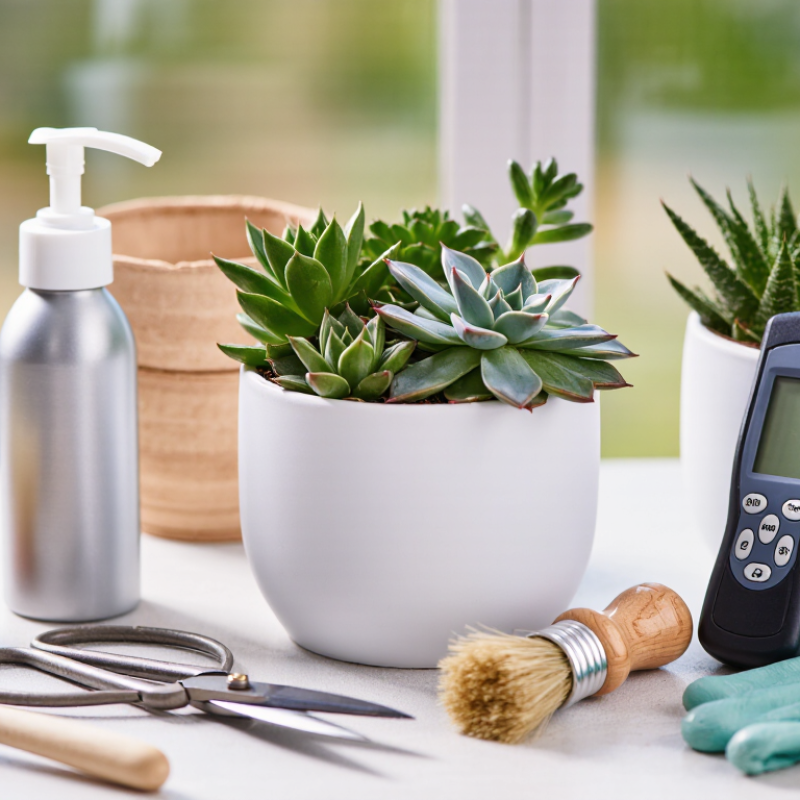
Choosing succulent tools begins with a clear care goal, not a crowded shopping list. Decide whether you want healthy display plants, new cuttings, or faster propagation. Each goal changes your equipment needs.
For a sunny windowsill, measure light across the day before buying anything. A small light meter can reveal weak afternoon exposure. I once blamed poor soil for stretched growth, but the real problem was winter light. That mistake changed my routine. A drainage-focused pot, gritty growing mix, and narrow watering can usually matter more than decorative accessories. Keep a soft brush nearby for dust and a magnifying glass for early pest checks. Small details help.
Your growing environment also sets the limits. Humid rooms need stronger airflow and longer drying time between waterings. Dry rooms may require closer observation, but not automatic daily watering. Check the soil several centimeters below the surface, then consider the plant’s leaf firmness and pot weight. Moisture meters can help beginners, although they are not equally accurate in coarse mixes. Use them as evidence, not absolute truth. Record light, watering dates, and seasonal changes for several weeks. Patterns become clearer. My records are imperfect, yet they prevent repeated guesses. Choose tools that answer real problems in your space, and leave room to revise your method.
Healthy succulents need fewer tools than many beginners expect. A narrow-spout watering can gives better control around the soil line. For small pots, a squeeze bottle helps direct water without flooding the leaves. I also keep a moisture meter nearby, although I do not trust it alone. Dry soil, pot weight, and leaf firmness provide better evidence together. Water slowly until a little drains below.
Pruning requires clean, sharp scissors or compact bypass shears. They remove dead leaves and damaged roots with less crushing. Disinfect the blades before and after cutting to reduce contamination between plants. Wear thin gloves when handling spiny varieties. I once trimmed a healthy stem too aggressively, so I now pause before every cut. A small tray catches fallen soil and keeps the workspace manageable.
For planting, choose a narrow trowel, wooden stick, and drainage scoop. The stick fills gaps around roots without compacting the mix too heavily. A soft brush removes loose soil from leaves and tight rosettes. Use pots with drainage holes, and check that the container is not oversized. I prefer measuring the root ball first, but I still occasionally choose a pot that is too deep. That mistake can keep the mix wet longer than expected.
How to Choose Must Have Tools for Succulent Care in 2026?
Safe materials should guide every succulent tool choice. Stainless steel resists rust and is easy to clean after handling damp soil. Unfinished wood can absorb moisture, crack, and shelter plant pathogens. Choose smooth, food-safe plastic for small trays and scoops. Avoid sharp edges, peeling coatings, and unknown metal blends. I once used a cheap scoop with a rough seam. It scratched a ceramic pot and bruised a leaf.
Suitable sizes matter more than having many tools. A narrow scoop fits between crowded rosettes without burying leaves. Small pruning scissors give better control around dry stems and offsets. For deep pots, choose tweezers long enough to reach the soil, but not so long that they feel unstable. A drainage probe should enter compact soil gently. Too much force can damage hidden roots. Measure your containers before buying anything. My first tools were oversized, and careful watering became surprisingly clumsy.
Ergonomic design protects both plants and hands. Look for cushioned, non-slip handles that remain secure with damp fingers. Rounded grips reduce pressure during repetitive pruning or repotting. Lightweight tools help, but extremely thin handles may cause hand fatigue. Test the opening motion before purchase if possible. Good tools should feel balanced, not merely attractive. I still prefer a plain tool that works reliably, although I sometimes choose appearance too quickly. Clean blades with suitable disinfectant, then dry them fully before storage.
Choose safe materials, suitable sizes, and ergonomic designs.
The chart uses a practical 1–5 selection score for common succulent-care tools. Stainless steel and washable materials receive higher safety scores, compact tools score higher for small pots, and cushioned, easy-grip handles score higher for ergonomic use. These criteria help reduce contamination, avoid overwatering, and improve control when working with shallow roots and spines.
Succulent care needs precision, not a crowded toolbox. A narrow-spout watering can controls flow around shallow roots. Stainless-steel tweezers remove dead leaves without bruising nearby growth. A small moisture meter can help, but it should not replace observation.
Quality shows through balance, clean edges, and corrosion resistance. After each use, wipe soil from blades and dry metal parts completely.
Disinfect pruners between plants, especially after cutting soft or damaged tissue. The Royal Horticultural Society’s plant-health guidance supports clean cutting equipment to reduce disease movement. Maintenance takes minutes. Replacement costs more.
A 2024 Garden Media Group trends report highlights continued growth in indoor gardening, suggesting more people will manage plants in limited spaces. That makes compact, durable tools more valuable than seasonal kits.
Still, I sometimes buy tools that look professional but feel awkward after ten minutes. That is a mistake worth noticing.
Test the grip, storage needs, and cleaning routine before judging long-term value. A cheaper tool may win if it stays useful, repairable, and easy to maintain for several growing seasons.
A practical succulent care toolkit in 2026 should solve real problems, not fill a drawer.
Start with a narrow-spout watering can, a drainage tray, and a small scoop for gritty soil. A wooden chopstick checks moisture below the surface without disturbing roots.
Let the soil dry deeply before watering again. Wet roots often cause more damage than missed watering.
Add clean pruning snips, thin gloves, a soft brush, and a magnifying glass. I use snips for dead roots and damaged leaves, then clean them before touching another plant.
The brush removes dust from leaf surfaces and spines. A magnifying glass can reveal pests early.
Keep a simple notebook nearby. Record watering dates, light changes, and unusual leaf softness. Details matter.
A moisture meter may help beginners, but it should not replace observation. Some gritty mixes produce unreliable readings. A small thermometer and light meter can clarify cold windows or weak indoor light. Use them as evidence, not absolute instructions.
My first toolkit had too many decorative tools and lacked a quarantine box. That was a costly lesson. Keep new plants separate for several weeks, inspect them regularly, and label each pot with its planting date.
A clean workspace, steady observations, and a willingness to adjust will make the toolkit genuinely useful.
Decide whether you want healthy display plants, new cuttings, or faster propagation. Each goal needs different tools. Avoid buying a crowded kit.
Watch the growing area throughout the day. A small light meter can reveal weak afternoon exposure. Stretched growth may come from poor light, not bad soil.
Choose a narrow-spout watering can, drainage tray, gritty mix scoop, and wooden chopstick. Add pruning snips, thin gloves, a soft brush, and a magnifying glass.
Check several centimeters below the soil surface before watering. Consider leaf firmness and pot weight too. Let the soil dry deeply between waterings. Daily watering is usually unnecessary.
It can help beginners, but readings may fail in coarse mixes. Treat the result as evidence, not absolute truth. Your fingers and observations still matter.
Wipe soil from blades after use. Dry metal parts completely to reduce corrosion. Disinfect pruning snips between plants, especially after cutting damaged tissue. Maintenance takes minutes.
Record watering dates, light changes, planting dates, and unusual leaf softness. Note seasonal changes for several weeks. Patterns become clearer.
Keep new plants separate for several weeks. Inspect leaves, roots, and stems with a magnifying glass. This can reveal pests before they reach established plants.
Test the grip, storage needs, cleaning routine, and cutting control. Durable does not always mean expensive. An awkward tool may become useless after ten minutes. That was careless.
Choosing the right succulent care tools in 2026 begins with understanding your plants, indoor or outdoor growing space, climate, and personal care routine. What are the must-have tools for succulent care? A practical starter set should include a narrow-spout watering tool for controlled moisture, clean pruning scissors for removing damaged growth, a small trowel for repotting, and a brush or soft tool for clearing soil from leaves and containers. These essentials help prevent overwatering, reduce plant damage, and make routine maintenance easier.
When selecting each item, prioritize rust-resistant, plant-safe materials, suitable sizes, comfortable grips, and designs that provide precise control. Compare durability, cleaning requirements, storage convenience, and long-term usefulness rather than choosing tools based only on appearance or price. A well-planned toolkit should match your collection’s size and include only equipment you can use regularly. With thoughtful choices and consistent maintenance, your succulent care tools can support healthier plants, cleaner work, and more efficient gardening throughout the year.

Moxie Garden