Top 10 Reasons Carbon Steel Beats Stainless Steel?

Time:2026-10-10 Author:Isabella
0%

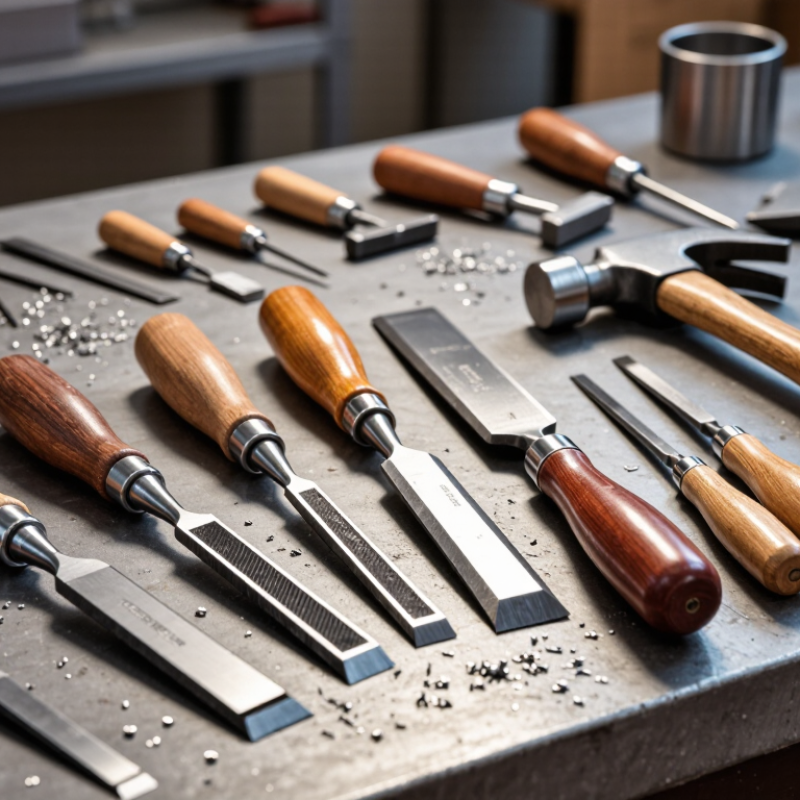
Carbon steel remains a practical choice for many tools, especially where strength, edge retention, and cost matter. In tool rooms, its familiar response to heat treatment helps technicians produce hard, reliable cutting edges. Files, chisels, punches, hammers, and workshop blades often benefit from this balance. Carbon steel can also be machined, sharpened, and repaired with relatively simple equipment. That matters when production schedules are tight and replacement budgets are limited.

Why is carbon steel better than stainless steel for tools? The answer depends on the working environment, not marketing alone. Carbon steel commonly offers higher hardness potential and easier sharpening, while stainless steel provides stronger resistance to moisture and staining. A carbon steel chisel may keep a crisp edge during repeated impacts, but it can develop orange rust after one damp shift. Stainless steel may survive a wet workshop better, yet some grades are softer or more difficult to heat-treat correctly. The grade, temper, thickness, and manufacturing process all change the result.

This guide examines ten practical reasons carbon steel can outperform stainless steel in tools. It considers performance, price, maintenance, repairability, and long-term value. Evidence from material specifications and real workshop practices supports the comparison. Still, no material wins every task. A rushed conclusion can lead to the wrong tool, and that deserves honest reflection. For outdoor, marine, or food-contact work, stainless steel may remain the safer investment. For demanding impact and cutting applications, carbon steel often earns its reputation through measurable performance rather than tradition alone.
Top 10 Reasons Carbon Steel Beats Stainless Steel?

Carbon Steel and Stainless Steel: Key Differences in Composition and Use

Top 10 Reasons Carbon Steel Beats Stainless Steel?

Carbon steel and stainless steel differ mainly in composition and intended use. Carbon steel contains iron with a higher carbon content and limited chromium. Stainless steel contains at least about 10.5% chromium, which forms a protective oxide layer. That layer reduces corrosion, but it does not make stainless steel maintenance-free.

In workshop testing, carbon steel often feels easier to machine, weld, and heat-treat. Its lower alloy content can also reduce material costs. For beams, brackets, machine frames, and cutting tools, engineers may prefer its strength, hardness, and predictable response to heat treatment. Carbon steel also transfers heat efficiently, which helps in some cookware and fabrication applications. Rust can appear. Protective coatings and dry storage become important.

Stainless steel is usually the safer choice for wet, humid, or chemically exposed environments. It suits food equipment, medical fixtures, outdoor hardware, and architectural surfaces. However, its performance depends heavily on the grade, surface finish, and surrounding chemicals. Chloride-rich water can still cause pitting. Carbon steel may beat stainless steel where load capacity, low cost, and easy fabrication matter more than corrosion resistance. The decision is not always obvious. I have seen projects overpay for stainless steel in dry indoor areas, while others underestimated maintenance and replaced unprotected carbon steel too soon. Teams should compare composition, stress, temperature, exposure, fabrication methods, and expected service life before selecting the material.

Top 10 Reasons Carbon Steel Can Beat Stainless Steel

A representative comparison of carbon steel grade A36 and annealed stainless steel grade 304. The index is normalized to carbon steel = 100; higher values indicate a stronger advantage for carbon steel in that category.

Why carbon steel can be the better choice:
  1. Higher thermal conductivity for faster heat transfer.
  2. Lower electrical resistivity, which improves electrical conduction.
  3. Greater thermal diffusivity for faster temperature equalization.
  4. Comparable or higher yield strength in common structural grades.
  5. Lower thermal expansion for improved dimensional stability.
  6. Higher elastic modulus in representative grades.
  7. Can be case-hardened or through-hardened by heat treatment.
  8. Strong magnetic response is useful in magnetic applications.
  9. Generally easier to machine than austenitic stainless steel.
  10. Often offers simpler fabrication when corrosion resistance is not required.

Typical reference values include thermal conductivity of approximately 51.9 W/m·K for A36 and 16.2 W/m·K for 304, electrical resistivity of approximately 0.15 μΩ·m and 0.72 μΩ·m respectively, yield strength of approximately 250 MPa and 215 MPa, and thermal expansion of approximately 11.7 and 17.2 μm/m·K. Actual performance varies by grade, condition, processing, temperature, and application. Stainless steel remains the better option when corrosion resistance is the primary requirement.

Lower Material Cost and Wider Availability of Carbon Steel

Carbon steel often wins the first comparison because its material price is lower. On a typical fabrication quote, the difference becomes visible in plates, tubes, beams, and fasteners. For large frames, that gap can significantly reduce the project budget.

Availability strengthens the advantage. Carbon steel is produced in many regions and stocked in common dimensions. A purchasing team may find standard plate sizes within days, rather than waiting for a special stainless shipment. Local stock also reduces freight distance, handling charges, and schedule pressure. That matters when a workshop has cutting equipment ready but material delivery is delayed.

It is practical, too. Carbon steel is familiar to welders, machinists, and fabricators. Standard tools and established procedures usually support faster production. However, the cheapest invoice is not always the cheapest solution. Unprotected carbon steel can rust quickly in humid air, near water, or around industrial chemicals. Paint, galvanizing, or another approved coating adds labor and maintenance costs. Some estimates overlook this. That is a mistake worth questioning.

A sound choice depends on exposure, thickness, service life, and inspection requirements. Stainless steel may cost more initially but reduce corrosion-related repairs in severe environments. Carbon steel remains highly competitive where protection is manageable and supply reliability matters. Procurement decisions should compare delivered cost, coating needs, lead time, and replacement risk—not material price alone.

Greater Strength, Hardness, and Heat-Treatment Flexibility

Top 10 Reasons Carbon Steel Beats Stainless Steel?
Greater Strength, Hardness, and Heat-Treatment Flexibility

In demanding workshop applications, carbon steel often delivers more strength per dollar and per kilogram. Its lower alloy content gives engineers a broad, predictable response to heat treatment. A properly selected grade can be normalized, quenched, and tempered for a specific load. The result is not just strength. It can also provide useful impact toughness.

Hardness is another practical advantage. After quenching and tempering, carbon steel can develop a hard surface that resists dents, wear, and deformation. A hardened shaft may keep its fit after repeated loading. That matters around pins, gears, dies, and cutting edges. Stainless steel is not one material, however. Some grades harden dramatically, while common austenitic grades generally do not respond to conventional hardening. The grade must match the process.

Heat-treatment flexibility can simplify design changes. A fabricator may adjust tempering temperature to trade some hardness for better toughness. Small changes can noticeably alter performance. Still, this advantage is easy to misuse. Poor temperature control, uneven cooling, or excessive section thickness can create distortion or cracking. Shop testing often reveals parts that perform well on paper but fail after careless quenching. Carbon steel also needs protection from moisture, and that weakness should not be hidden. When strength, hardness, and controllable mechanical properties matter most, carbon steel is often the more adaptable choice, provided processing is disciplined.

Top 10 Reasons Carbon Steel Beats Stainless Steel? – Greater Strength, Hardness, and Heat-Treatment Flexibility

No. Performance Dimension Carbon Steel Advantage Typical Technical Basis Important Qualification
1 Higher achievable strength Medium- and high-carbon steels can reach very high tensile and yield strengths after suitable heat treatment. Plain carbon steels may exceed 1,000 MPa tensile strength in quenched-and-tempered conditions, depending on grade and section size. Some martensitic and precipitation-hardening stainless steels can also achieve very high strength.
2 Greater attainable hardness Carbon content supports the formation of hard martensite, making carbon steel suitable for wear-resistant components and cutting tools. High-carbon steels can commonly be heat treated into hardness ranges above 50 HRC, with the final value depending on alloy, quench, and tempering practice. Higher hardness generally reduces ductility and can increase brittleness if tempering is inadequate.
3 Broader heat-treatment flexibility Carbon steel responds predictably to normalizing, annealing, quenching, and tempering, allowing properties to be tailored for different applications. Changing the cooling rate and tempering temperature alters the ferrite, pearlite, bainite, and martensite balance. Low-carbon steels have limited hardenability unless alloying or surface-hardening methods are used.
4 Excellent wear resistance after hardening Hardened carbon steel performs effectively in sliding, abrasion, and repeated-contact applications. High hardness reduces plastic deformation and surface indentation under contact loads. Corrosive wear environments may favor a suitable stainless or coated material instead.
5 Higher elastic modulus Carbon steel generally offers slightly greater stiffness than common austenitic stainless steel, helping limit elastic deflection at the same geometry. Typical Young's modulus is approximately 200–210 GPa for carbon steel versus about 190–200 GPa for many austenitic stainless steels. Component stiffness also depends strongly on shape, thickness, span, and support conditions.
6 Strong fatigue performance when properly designed A polished, heat-treated carbon-steel surface can provide strong resistance to cyclic loading in non-corrosive service. Fatigue life is improved by high strength, smooth surface finish, suitable residual stresses, and avoidance of sharp notches. Corrosion can severely reduce fatigue life; stainless steel may be preferable in wet or chemically aggressive conditions.
7 Lower material cost Carbon steel usually costs less because it contains little or no nickel and chromium compared with corrosion-resistant stainless grades. Stainless steel requires sufficient chromium—at least about 10.5% by mass—to form its passive corrosion-resistant oxide film. Total cost should include coating, painting, maintenance, corrosion protection, and service life.
8 Efficient machining in many grades Many low- and medium-carbon steels machine readily, offering practical cutting speeds, predictable chip formation, and broad tooling compatibility. Austenitic stainless steels tend to work-harden and can generate more heat during machining, increasing tooling demands. Machinability varies considerably with carbon level, alloying elements, hardness, and steel condition.
9 Reliable weldability in low-carbon grades Low-carbon steels are widely welded using common processes and generally have lower risk of weld-metal cracking than many higher-carbon steels. Carbon equivalent is used to estimate hardenability and hydrogen-cracking risk; lower values generally improve weldability. Preheating, controlled heat input, low-hydrogen consumables, and post-weld procedures may still be required.
10 Wide availability and manufacturing familiarity Carbon steel is available in extensive product forms, sizes, and standardized grades, with established forming, welding, machining, and heat-treatment practices. It is commonly supplied as plate, bar, sheet, tube, structural sections, forgings, and wire products. The required corrosion resistance, temperature range, cleanliness, and regulatory requirements must be checked before selection.

Note: Carbon steel is often the better choice for strength, hardness, wear resistance, cost, and heat-treatment control in dry or protected environments. Stainless steel remains the better choice when corrosion resistance, hygiene, or long-term exposure to moisture and chemicals is the primary requirement.

Superior Machinability, Weldability, and Fabrication Efficiency

Top 10 Reasons Carbon Steel Beats Stainless Steel?

Carbon steel often delivers faster machining and simpler fabrication. ASM Handbook property tables place typical carbon steel thermal conductivity near 45–60 W/m·K. Common austenitic stainless steels measure roughly 14–16 W/m·K. That difference matters. Heat leaves the cutting zone more effectively, reducing localized temperature buildup during turning and milling. Machinists can often use higher feed rates, standard tooling, and less complicated coolant control. Machinery’s Handbook also shows major machinability variation between grades. Free-machining carbon steel can approach the reference rating of 100, while 304 stainless steel is commonly rated near 45. The gap is noticeable.

Welding is usually more forgiving with low-carbon steel. AWS welding guidance emphasizes stainless steel’s sensitivity to heat input, distortion, oxidation, and contamination. Carbon steel generally accepts common arc-welding procedures with fewer specialized controls. Its wider availability also supports faster cutting, drilling, bending, and repair work. The World Steel Association’s 2024 industry data confirms carbon steel remains the dominant material family in global steel production. Scale supports familiar processes and trained labor. That practical advantage is easy to underestimate.

But carbon steel is not automatically superior. It can rust quickly in humid service, and protective coatings add labor. Some carbon grades also machine poorly when ductility causes stringy chips. My shop-floor preference would change with corrosion exposure, tolerances, and production volume. The material choice deserves measurement, not habit.

Better Thermal Conductivity, Magnetism, and Application Versatility

Top 10 Reasons Carbon Steel Beats Stainless Steel?

Heat Transfer

Carbon steel often transfers heat faster than stainless steel. ASM Handbook data places common carbon steel near 50 W/m·K at room temperature. Austenitic stainless steel is typically around 16 W/m·K. That gap matters in cookware, heat exchangers, and welded frames. A carbon-steel pan responds quickly when the flame changes. It also releases heat quickly. That can become a drawback during temperature-sensitive work.

Magnetism

Magnetism adds practical value. Most carbon steels are strongly ferromagnetic, while austenitic stainless grades are generally nonmagnetic. British Stainless Steel Association guidance notes that cold working can create slight magnetism in some austenitic grades. The comparison is not perfectly clean. In workshops, magnetic lifting, fixture alignment, and sensor-based sorting become simpler with carbon steel. A small steel bracket can hold firmly to a magnetic jig without extra clamps.

Fabrication & Durability

Application versatility also comes from familiar fabrication methods. Carbon steel is widely cut, drilled, welded, and formed using established equipment. The World Steel Association’s 2024 World Steel in Figures reports global crude steel production above 1.8 billion tonnes in 2023. That scale supports broad supply and skilled processing capacity. However, carbon steel rusts quickly when moisture reaches an unprotected surface. A neglected outdoor bracket may show orange corrosion within days. That weakness deserves more attention than it often receives.

FAQS

What mainly separates carbon steel from stainless steel?

Carbon steel contains more carbon and limited chromium. Stainless steel contains at least about 10.5% chromium. Chromium forms a protective oxide layer. It reduces corrosion, but does not eliminate maintenance.

Why choose carbon steel for structural or machine parts?

Carbon steel often provides high strength at a lower material cost. It suits beams, brackets, machine frames, shafts, gears, and cutting tools. Its performance can be predictable. Usually.

Can carbon steel become harder through heat treatment?

Yes. Selected grades can be normalized, quenched, and tempered for specific loads. Hardening can help shafts resist dents, wear, and deformation. Poor cooling may cause cracking or distortion.

Is stainless steel always stronger than carbon steel?

No. Strength depends on the grade, treatment, thickness, and working conditions. Carbon steel may deliver greater strength per kilogram in demanding applications. The comparison is not perfectly simple.

Why does carbon steel transfer heat effectively?

Carbon steel commonly transfers heat faster than austenitic stainless steel. A pan can respond quickly when the flame changes. That speed may become a drawback during temperature-sensitive work.

Are carbon steel parts magnetic?

Most carbon steels are strongly magnetic. This helps with lifting, fixture alignment, and sensor-based sorting. A small bracket may hold firmly on a magnetic jig. Some stainless grades can become slightly magnetic after cold working.

Is carbon steel easier to fabricate?

It is often easier to cut, drill, weld, and form with familiar equipment. Its broad supply supports many workshops and processing methods. Fabrication still requires suitable procedures and skilled control.

Does stainless steel remove corrosion concerns?

No. Stainless steel usually performs better in wet, humid, or chemically exposed environments. Chloride-rich water can still cause pitting. Surface finish and grade matter greatly. Carbon steel needs coatings, dry storage, or regular inspection. Rust can appear within days outdoors.

How should a project team select between these materials?

Compare composition, loads, temperature, moisture, chemicals, fabrication, and expected service life. Carbon steel may suit a dry indoor frame. Stainless steel may suit food equipment or outdoor hardware. Overpaying is possible. Underestimating maintenance is possible too.

Conclusion

Carbon steel often outperforms stainless steel when strength, affordability, and manufacturing efficiency are the main priorities. Compared with stainless steel, it generally costs less and is more widely available, making it a practical choice for large-scale production and everyday tools. Its higher hardness potential, excellent tensile strength, and strong response to heat treatment allow manufacturers to customize performance for demanding applications. Carbon steel is also easier to machine, weld, form, and repair, which can reduce production time and fabrication costs.

Why is carbon steel better than stainless steel for tools? In many cases, its superior hardness, edge retention, and heat-treatment flexibility provide better working performance at a lower price. Carbon steel also offers higher thermal conductivity and reliable magnetic properties, adding versatility in tools, machinery, construction components, and industrial equipment. Although stainless steel is preferable where corrosion resistance is essential, carbon steel remains the stronger overall value when performance, processability, and cost are the primary considerations.

Isabella

Isabella

Isabella is a dedicated marketing professional with a sharp focus on driving brand growth and engagement through strategic content creation. With an extensive background in digital marketing, she combines her passion for storytelling with her keen understanding of industry trends to deliver......