Why should I use a garden kneeler? The answer begins with your body, not the tool itself. During planting, weeding, or edging, gardeners often kneel on cold, damp soil for several minutes. Hard ground presses against the knees. Small stones create sharp pressure points. Repeatedly standing can also strain the lower back and thighs. A garden kneeler adds cushioning, stability, and a cleaner working surface.
Joe Lamp’l, horticulturist, gardening educator, and founder of Growing a Greener World, expresses this practical principle: “The right tool should help your body, not fight it.” His advice reflects an important gardening habit. Good equipment should support careful work without encouraging careless movement. A kneeler can reduce direct pressure, improve balance, and make close planting tasks more comfortable. Many models also turn into small garden seats, which helps when pruning low plants or sorting seedlings.
Still, a kneeler is not a cure-all. It cannot replace stretching, sensible lifting, or regular position changes. I have found that even a padded model becomes uncomfortable when used too long. That detail is easy to overlook. Choose a design with firm padding, stable handles, and water-resistant material. Check that it supports your weight safely. Keep tools nearby, but do not overload the side pockets. A garden kneeler will not make every task effortless. It can, however, help you stay focused, protect vulnerable joints, and enjoy a longer afternoon among the plants.
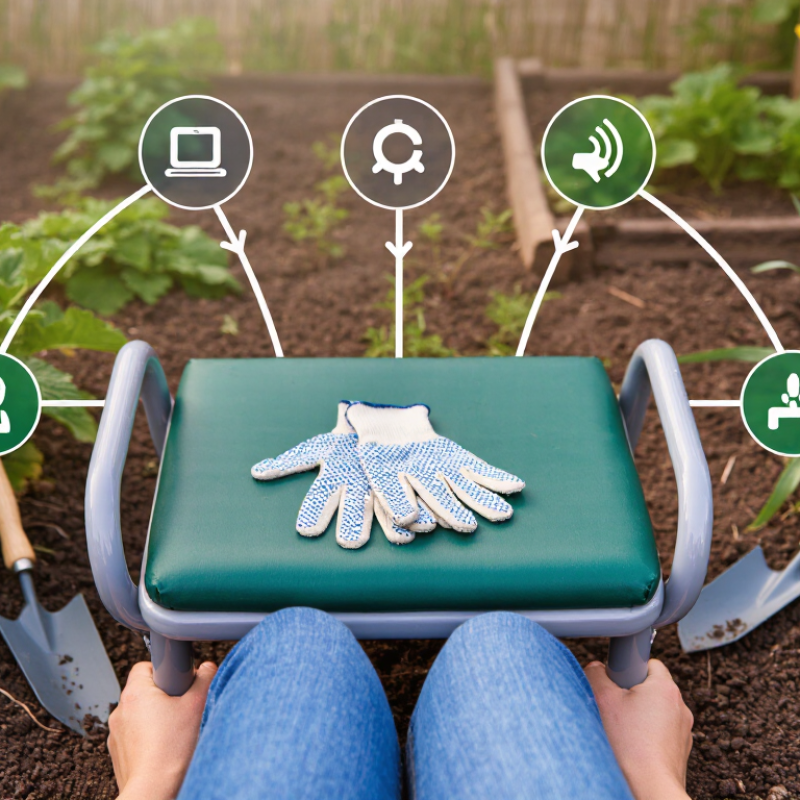
Global Context: WHO Reports 1.71 Billion People Live With Musculoskeletal Conditions
Why Should I Use a Garden Kneeler for Gardening?
Global Context: WHO Reports 1.71 Billion People Live With Musculoskeletal Conditions
Gardening feels gentle, but repeated kneeling can strain the knees, hips, wrists, and lower back. The World Health Organization reports that 1.71 billion people live with musculoskeletal conditions worldwide. This figure includes many disorders, not only gardening-related pain. Still, it shows how common movement problems have become.
A garden kneeler can reduce pressure on your joints by spreading your weight across a padded surface. Some designs also provide raised handles, helping you stand without pushing hard against the ground. This matters when planting seedlings, pulling weeds, or trimming low herbs. The support is simple. The difference can feel immediate.
I have noticed that comfort sometimes changes my habits more than motivation. With a kneeler nearby, I take shorter sessions and change positions more often. I still forget occasionally. That is the imperfect part. A kneeler cannot correct poor posture, overuse, or an existing injury. Keep your back neutral, avoid twisting, and stop when pain becomes sharp or persistent. People with arthritis, weakness, or recurring pain should ask a qualified healthcare professional for personal guidance. A stable, clean kneeler also reduces the chance of slipping on damp soil, although no garden tool removes every risk.
Kneeling Risks: How Awkward Postures Increase Pressure on the Knees
Gardening often begins with a simple reach and ends with both knees on hard soil. Awkward kneeling can sharply increase pressure around the kneecap, especially when the hips stay bent and the trunk twists. The problem grows when gardeners remain in one position for several minutes. NIOSH identifies kneeling, squatting, bending, and twisting as ergonomic risk factors linked with fatigue and musculoskeletal strain.
The evidence is concerning.
A 2017 systematic review in Occupational and Environmental Medicine found that prolonged occupational kneeling or squatting was associated with a 69% higher odds of knee osteoarthritis. Gardening is not identical to industrial work, but the posture can be surprisingly similar.
In 2022, the U.S. Bureau of Labor Statistics recorded 1,008,370 nonfatal work injuries involving days away from work because of musculoskeletal disorders. That figure does not measure home gardening, yet it shows how common movement-related strain can become.
A garden kneeler can raise the hips, cushion contact with the ground, and reduce deep knee flexion. Handles may also help a gardener stand without pulling sharply through the knees. Use it as a position-changing aid, not a complete solution.
Stand, stretch, and shift weight regularly.
Keep tools close to avoid repeated twisting.
Still, a kneeler may encourage longer sessions, which deserves honest attention. Comfort can hide fatigue. Pain, swelling, or instability should be assessed by a qualified healthcare professional.
Kneeler Mechanics: Padding, Handles, and Height Support Better Garden Ergonomics
A garden kneeler can change how ordinary planting feels.
I noticed the difference after a morning spent weeding beside wet tomato beds. My knees felt supported, not pressed into hard soil. Thick padding spreads body weight across a wider area. It also reduces pressure from small stones and uneven ground. However, very soft foam can feel unstable. I prefer firm cushioning that compresses slightly without folding under my weight.
The frame should include sturdy handles for controlled movement.
I use them when lowering myself and standing, especially after kneeling for several minutes. Handles also reduce sudden strain on the wrists and thighs. Height matters as well. A suitable kneeler keeps the hips above the heels and the back closer to neutral. This position can make pruning, planting, and lifting easier. A low design may still force excessive knee bending. A tall design may feel awkward near delicate seedlings. Measure the working height before buying. I once ignored this and kept leaning forward, which defeated the ergonomic benefit. Check the joints, grip texture, and frame stability on grass and paving. Gardening tools get dirty, so washable padding is useful. Still, comfort should not replace movement. I change positions, stretch briefly, and avoid staying kneeling too long. A kneeler helps, but it cannot correct every poor working habit.
Selection Standards: Comparing Stability, Cushioning, Weight Capacity, and Durability
Why Should I Use a Garden Kneeler for Gardening?
A garden kneeler reduces direct pressure on your knees and helps keep your torso more upright. Selection should begin with stability, not appearance. A wide base, firm side supports, and non-slip feet matter on wet soil or uneven paving. ISO 11226 evaluates static working postures, but it does not certify garden kneelers. Therefore, product stability still requires practical checking. Sit, kneel, and shift your weight before trusting it.
Cushioning should spread pressure without making balance difficult. Closed-cell foam resists moisture better than absorbent padding. Look for enough thickness to prevent your kneecaps touching the frame. Too soft can feel comfortable briefly, then collapse. I once chose a heavily padded model and found it unstable while reaching for seedlings. That mistake was obvious later. Ergonomic comfort is not simply softness.
Weight capacity needs careful reading. Choose a tested rating above your body weight, clothing, and carried tools, with a sensible safety margin. Do not rely on a decorative load claim. The U.S. Bureau of Labor Statistics reported 946,410 work-related musculoskeletal disorder cases involving days away from work in its 2023 survey. Gardening is different, but repeated kneeling still deserves attention. Inspect hinges, welds, stitching, and plastic after each season. UV exposure, soil grit, and moisture can weaken these parts. A lighter frame improves carrying, yet excessive lightness may reduce stability. Durability is therefore a trade-off, not a simple weight contest.
Why Should I Use a Garden Kneeler for Gardening? - Selection Standards: Comparing Stability, Cushioning, Weight Capacity, and Durability
| Product Type |
Typical Construction |
Stability |
Cushioning |
Typical Weight Capacity |
Approx. Product Weight |
Durability Factors |
Best Use |
| Folding Garden Kneeler |
Steel or aluminum frame with a padded kneeling surface |
High
Wide feet and rigid frame |
Medium to high
Usually 1–2 in. foam |
220–330 lb
(100–150 kg) |
4–7 lb
(1.8–3.2 kg) |
Powder-coated metal resists surface rust; hinges and welds need regular inspection. |
General weeding, planting, pruning, and short periods of kneeling |
| Convertible Kneeler-Seat |
Reinforced tubular frame with a reversible padded platform |
High
Supports kneeling and seated positions |
Medium to high
Varies by pad thickness |
220–330 lb
(100–150 kg) |
5–9 lb
(2.3–4.1 kg) |
Strong frames can last for years; moving joints and seat fasteners are the main wear points. |
Long gardening sessions and users who frequently change posture |
| Thick Foam Kneeling Pad |
Closed-cell EVA or polyethylene foam without a rigid frame |
Low to medium
Depends on surface firmness |
High
Often 0.5–1.0 in. thick |
Not usually load-rated
Suitable for kneeling only |
0.3–1.5 lb
(0.1–0.7 kg) |
Closed-cell foam resists water absorption; edges may tear or compress with heavy outdoor use. |
Lightweight work on soil, grass, patios, and other level surfaces |
| Low Garden Stool |
Plastic, resin, or metal stool with a molded or padded seat |
Medium to high
Depends on base width |
Low to medium
Often a thin seat pad |
200–300 lb
(91–136 kg) |
2–5 lb
(0.9–2.3 kg) |
Plastic resists moisture; metal models need protection from prolonged exposure to rain and soil. |
Seated planting, potting, and tasks requiring less knee contact |
| Heavy-Duty Framed Kneeler |
Thicker steel tubing, reinforced joints, and weather-resistant padding |
Very high
Designed for increased rigidity |
Medium to high
Firm support with reduced sagging |
300–400 lb
(136–181 kg) |
7–12 lb
(3.2–5.4 kg) |
Reinforced welds and corrosion-resistant coatings improve service life; greater weight reduces portability. |
Frequent use, heavier users, and firm support on uneven ground |
Selection note: Weight capacities are typical ranges reported for comparable product constructions, not universal limits. Always check the manufacturer’s stated capacity, inspect hinges and fasteners, and use a kneeler on stable ground.
Conclusion
Gardening often involves kneeling, bending, and reaching for long periods, which can place unnecessary pressure on the knees, hips, and lower back. With 1.71 billion people worldwide living with musculoskeletal conditions, improving gardening posture is increasingly important. Why should I use a garden kneeler? A well-designed kneeler provides padded support, encourages a more balanced position, and may reduce strain while planting, weeding, or pruning. Handles can also make it easier to move between kneeling and standing, while suitable height support helps maintain better alignment.
A garden kneeler is most effective when combined with sensible work planning. Changing posture regularly, taking short breaks, and alternating tasks can help prevent discomfort during repetitive work. When selecting one, consider stability, cushioning, weight capacity, portability, and durable construction. Choosing a model that matches your body, gardening tasks, and working surface can make outdoor activities more comfortable, controlled, and sustainable.

 Moxie Garden